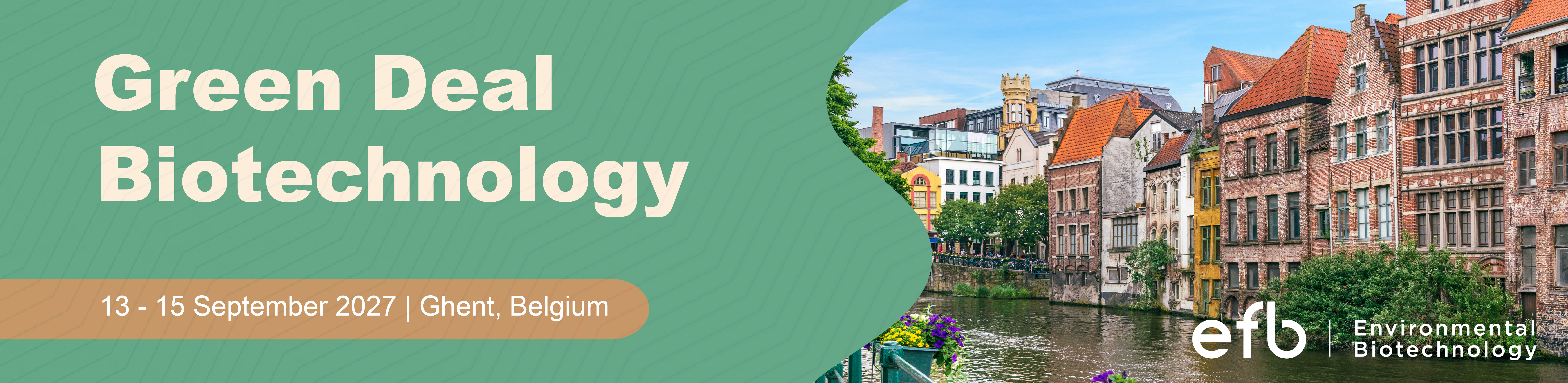
We are pleased to announce the upcoming edition of the Green Deal Biotechnology Conference 2027, organised by the EFB Environmental Biotechnology Division. The event will take place in Ghent, Belgium, from 13–15 September 2027.
With less than five years to go until the Fit for 55 milestone of the European Green Deal, the third edition of the Green Deal Biotechnology Conference will focus on how Environmental Biotechnology can contribute to achieving the EU’s 2030 climate objectives. The programme is organised around key areas of Environmental Biotechnology, and contributions are encouraged to highlight how research and innovation are engaging with the goal of reducing greenhouse gas emissions by 55%.
The areas in which contributions are accepted include:
- Innovative Solutions in (Waste)water Treatment
Biological treatment, biotransformation and removal of legacy pollutants and emerging threats such as PFAS, endocrine disruptors and antimicrobial resistance genes, using low-carbon bioprocesses including biofiltration, enzymatic breakdown and fungal bioremediation. Contributions are also welcome on biotech-enabled water reuse, membrane bioreactors, nature-based solutions such as constructed wetlands, rain gardens and algal treatments, as well as biotechnological approaches to remediate and restore aquatic ecosystems.
- Biotech for Carbon (Gas) Capture and Utilisation
Biological CO2 fixation using photosynthetic microbes and algae, methane bioconversion, biocatalytic and bio-electrochemical CO2 reduction, and microbe-enhanced carbon sequestration. The session will explore low-energy routes to transform greenhouse gases into biomass, bioplastics, fuels, proteins and platform chemicals, while supporting long-term carbon storage and the development of a bio-based carbon economy.
- Sustainable Agriculture and Soil Health
Biotechnology for improved nutrient cycling and balance in agriculture and soil restoration, including anaerobic digestion and nutrient-rich digestate, plant–microbe partnerships involving mycorrhizal fungi, rhizobia and plant growth-promoting rhizobacteria, phytoremediation, soil carbon sequestration and the development of alternative fertilisers through biological and bio-electrochemical nutrient recovery.
- Circular Bioeconomy and Waste Valorisation
Advanced anaerobic digestion and biogas-to-biomethane upgrading, enzymatic and microbial depolymerisation of municipal, agricultural and industrial waste streams, integrated cascading bioprocesses for the production of bioplastics, single-cell proteins, organic acids and platform chemicals, bioleaching and microbial recovery of critical raw materials, as well as mycelium and biocement for carbon-negative construction materials and industrial symbiosis platforms with verifiable greenhouse gas savings.
- Biotechnological Valorisation of Aquatic Resources
Sustainable valorisation of microalgae, macroalgae, cyanobacteria, fishery and aquaculture side streams, and extremophiles for the production of bio-based polymers, platform chemicals, biomaterials and bioactive compounds. Contributions may also address the recovery of collagen, chitin and bioactive peptides from processing discards, as well as AI-driven discovery, metabolic engineering and bioproduction of novel aquatic bioactive compounds for industrial applications.
- Monitoring, Digitalisation & Simulation in Environmental Biotechnology
Artificial intelligence, advanced monitoring, digital process models and hybrid modelling approaches supporting environmental biotechnology and bio-based value chains, including bioremediation, precision agriculture, precision fermentation and other environmental applications. Contributions are welcome where advanced computational tools are clearly linked to environmental contexts and the improvement of process performance and productivity.
The meeting will bring together scientists and professionals from academia and industry sharing a common interest in resource recovery and environmental biotechnology, with the aim of developing new technologies that support the goals of the European Green Deal.
The programme strongly acknowledges the diversity and different stages of researchers’ career development. To reflect this, keynote lectures by leading scientists will be combined with talks and short presentations by early-career researchers selected from submitted abstracts. Flash poster presentations will also be available.
We are looking forward to meeting all of you next year in Ghent!